

KSeF - Mandatory E-Invoice System. How to Prepare Your Company?
Poland's National e-Invoice System (KSeF) becomes mandatory in 2026. Check the deadlines, technical requirements and learn how to prepare your business for KSeF.
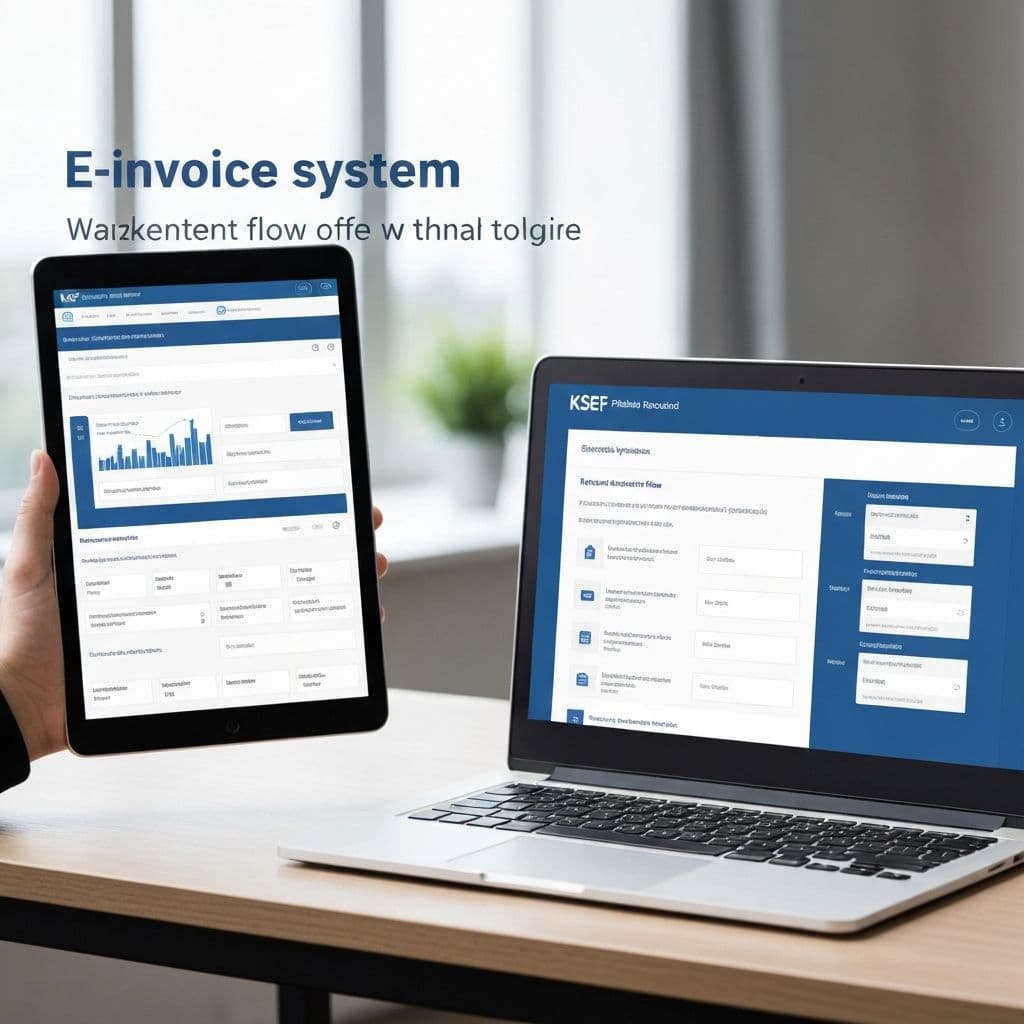
The National e-Invoice System (KSeF) is a revolution in invoicing that will affect every Polish company. It doesn't matter if you run a sole proprietorship or manage a large enterprise — from 2026, e-invoices become mandatory. It's time to prepare.
What is KSeF?
KSeF (Krajowy System e-Faktur / National e-Invoice System) is a central IT system operated by the Polish Ministry of Finance, through which all invoices issued between companies in Poland will pass.
How does it work?
- You issue an invoice in your accounting system
- The system sends it to KSeF in XML format
- KSeF assigns a unique identification number to the invoice
- The recipient downloads the invoice from KSeF (you don't send it by email or mail)
- Tax authorities have immediate insight into all transactions
This is the end of PDF invoices sent by email, paper documents, and manual data entry. One format, one system, full automation.
Implementation Deadlines — Who and When?
February 1, 2026 — Large Enterprises
Mandatory KSeF invoice issuance for companies with revenues over PLN 200 million per year. At the same time, all companies must be ready to receive invoices from KSeF.
April 1, 2026 — Remaining Companies
Mandatory for all VAT taxpayers, except for the smallest entities.
January 1, 2027 — Micro-businesses
Companies with monthly revenues below PLN 10,000 get additional time, but they too must eventually switch to KSeF.
Technical Requirements
XML Format (FA3)
Invoices in KSeF must be in a strictly defined XML format compliant with the FA(3) schema. This is not an ordinary text file — each field must be correctly filled in, and the structure must comply with the specification.
Integration with Accounting Systems
Your invoicing software must be able to:
- Generate invoices in XML format compliant with KSeF
- Send them to the system via API
- Receive confirmations and KSeF numbers
- Download purchase invoices from contractors
Most popular systems (Fakturownia, iFirma, Comarch, Symfonia, SAP) already offer or will soon release KSeF modules.
Authentication
To use KSeF, you need one of the following authentication methods:
| Method | For whom |
|---|---|
| Trusted Profile | Individuals, sole proprietors |
| Qualified signature | Everyone |
| Electronic seal | Companies (automation) |
| Authorization token | System integrations |
For automatic invoice sending through ERP systems, the most convenient option is an electronic seal or token.
How to Prepare Your Company — Practical Checklist
1. Check Your Accounting System
Call your software provider or check on their website:
- Does it support KSeF?
- When will the update be available?
- Is it included in the price or requires additional payment?
If you use Excel or invoice manually — it's time for a change.
2. Designate a Responsible Person
KSeF is not just an IT matter. You need someone who will:
- Understand the new regulations
- Train the team
- Be the contact for accounting and suppliers
3. Verify Contractor Data
KSeF requires correct data:
- NIP (Tax ID) — must be active and valid
- Company name — consistent with the register
- Address — current
Incorrect data = problem sending the invoice.
4. Test in the Demo Environment
The Ministry provides a KSeF test environment. Before the deadline, test:
- Issuing invoices
- Sending to KSeF
- Receiving purchase invoices
- Error handling
5. Plan Emergency Procedures
What if KSeF is down? What if your system fails? Regulations provide for an offline mode, but you need to know how to use it.
6. Train Employees
People issuing invoices need to know:
- The new invoicing process
- Where to check invoice status
- What to do in case of errors
- How to handle corrections
Benefits of KSeF
Although implementation requires effort, KSeF brings real benefits:
Faster VAT Refund
Invoices in KSeF = faster verification = shorter waiting time for VAT refund. For some companies, this is a significant improvement in liquidity.
No More Lost Invoices
An invoice in KSeF won't get lost, won't end up in spam, won't be accidentally deleted. It's in the central system, available to both parties.
Accounting Automation
Import purchase invoices with one click. No more manually retyping data from PDFs.
Easier Audits
Paradoxically — a transparent transaction history means less stress during audits. Everything is documented and consistent.
Fighting Fraud
KSeF makes it harder to issue fake invoices and commit VAT fraud. Fair competition for honest businesses.
Common Concerns and Questions
"My accountant will handle it"
Yes, but your system must be ready. If you use your own software or invoice directly, it's your responsibility.
"I have a small company, this doesn't apply to me"
It applies to all VAT taxpayers. Even if you have a later implementation deadline, from February 1, 2026, you must be ready to receive invoices from KSeF.
"What about invoices for private individuals?"
B2C invoices (for consumers) don't have to go through KSeF for now, but it's worth following changes in regulations.
"What if I don't make it in time?"
Penalties for not implementing KSeF can be up to 100% of the VAT amount on the invoice. Better not to risk it.
How Can We Help?
At nex-IT, we support companies in preparing IT infrastructure for KSeF:
System Audit
We check if your current software is ready for KSeF and what needs updating.
System Integration
We help connect your accounting system with KSeF — API configuration, certificates, testing.
Process Automation
We implement solutions for automatic download of purchase invoices and document archiving.
Training
We'll train your team on how to use the new invoicing system.
Technical Support
When something doesn't work — we're on the phone. IT helpdesk will solve KSeF problems like any other technical issue.
Summary
KSeF is not a question of "if" but "when". Deadlines are set, regulations adopted, the system is operational. Companies that prepare early will avoid stress and chaos at the last minute.
What to do now:
- Check your accounting system's readiness
- Create an account in the KSeF test environment
- Designate a person responsible for implementation
- Plan training for the team
- Test the entire process before the deadline
Need IT support for KSeF implementation? At nex-IT, we help companies prepare their technical infrastructure for new requirements. From system audits, through integration, to training and support. Contact us — we'll check what needs to be done in your company.
Related articles
How much does managed IT support cost in 2026?
See nex-IT managed IT pricing for 2026, what affects the monthly fee, realistic starting scenarios and which costs are priced separately.
Read moreKSC and NIS2 in Poland in 2026 – Business Duties and Audits
Learn who is covered by Poland's amended KSC Act, the key deadlines, and how a statutory audit differs from a technical readiness assessment.
Read moreIT Services in Bydgoszcz - Comprehensive IT Support for Businesses
Looking for reliable IT services in Bydgoszcz? nex-IT delivers comprehensive IT support for businesses - IT outsourcing, cybersecurity, networks, monitoring and technical support. Remote support plus on-site visits in Bydgoszcz and the surrounding region.
Read more